18 Oct 2026
How Shift Work Schedules Shape Bankroll Strategies in Evening Poker Tournaments

Shift work disrupts standard sleep cycles and forces many poker players to recalibrate their bankroll management when targeting evening tournaments that often begin between 6 PM and 9 PM. Data from workforce studies indicate that approximately 15 to 20 percent of adults in service industries maintain rotating or night schedules, and those individuals frequently participate in poker events during their off hours. This overlap creates specific pressures on how players allocate funds across buy-ins, travel, and recovery time.
Evening Tournament Structures and Scheduling Conflicts
Most major evening tournaments run on fixed weekly calendars that align with traditional daytime employment patterns, yet shift workers encounter different constraints. A player finishing a night shift at 7 AM may face reduced sleep before a 7 PM event, while someone on an afternoon rotation might arrive after only four hours of rest. Tournament organizers in major markets report consistent attendance from these demographics, with registration data showing peaks on weekends when shift overlap decreases. Observers note that late registration options, which allow entry up to the end of the third or fourth level, provide flexibility for those whose shifts end close to start times.
Performance Variables Linked to Circadian Disruption
Research on decision-making under fatigue shows measurable declines in risk assessment after extended wakefulness. Studies tracking participants across simulated shift conditions found increased variability in bet sizing and a tendency toward tighter early-round play followed by aggressive attempts to recover chips. Poker databases that aggregate hand histories reveal similar patterns among self-identified shift workers, with win rates dropping 8 to 12 percent in evening sessions compared with daytime play for the same cohort. These figures come from anonymized tracking across multiple platforms and reflect thousands of tournament entries rather than isolated anecdotes.
Bankroll Allocation Adjustments
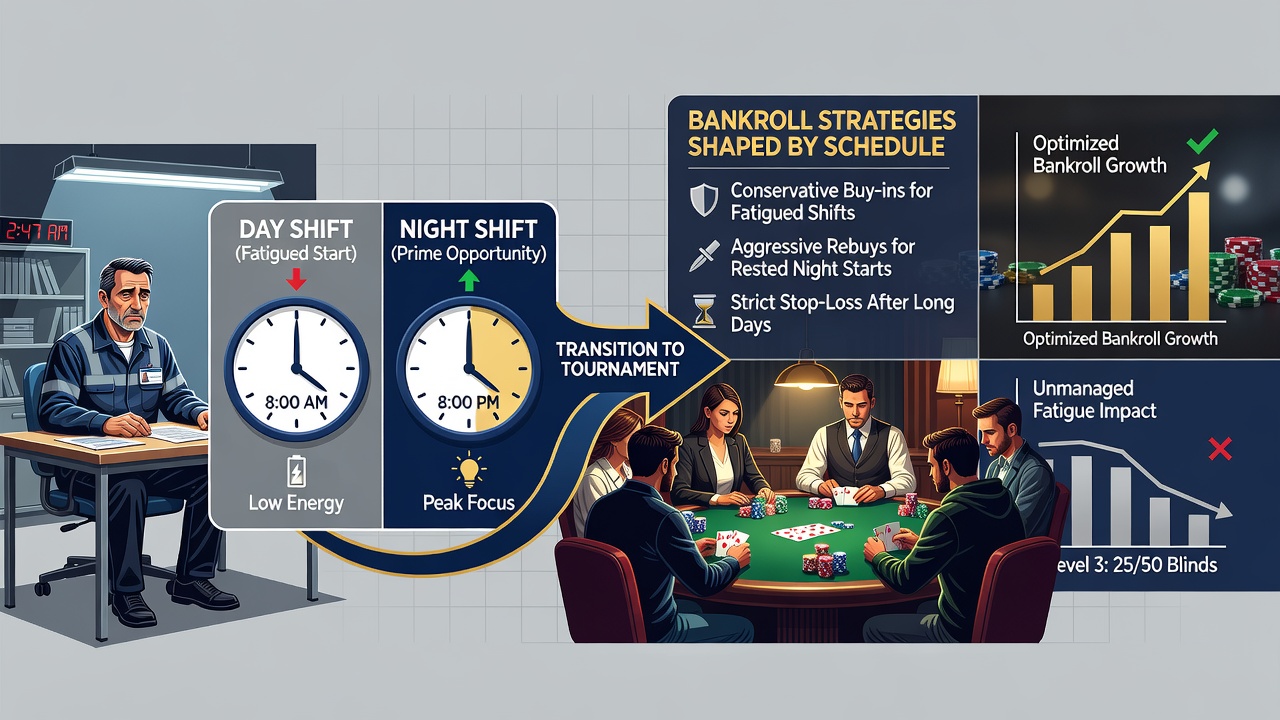
Players facing these constraints often modify standard bankroll ladders by increasing the number of buy-ins held in reserve. Traditional guidelines recommend 30 to 50 buy-ins for tournament players, yet those managing shift fatigue frequently maintain 60 to 80 buy-ins to account for variance caused by reduced focus. This buffer allows participants to absorb multiple below-average sessions without dropping stakes prematurely. In practice, a player targeting $200 buy-in events might set aside an additional $8,000 to $10,000 specifically earmarked for recovery nights following consecutive shifts.
What's interesting is how entry selection changes. Shift workers tend to favor tournaments with slower structures or larger fields that reward survival play over rapid accumulation. They also spread entries across multiple smaller events rather than concentrating on one high-variance main event, a pattern documented in registration logs from October 2026 festival schedules. This approach reduces the impact of any single fatigued performance while still allowing volume targets to be met within available off-shift windows.
Recovery and Session Management Protocols
Effective bankroll strategies incorporate post-session recovery time. Data collected by player tracking apps show that participants who schedule at least eight hours of uninterrupted rest between shifts and tournaments experience lower standard deviation in results. Some adopt strict rules that prohibit play if total sleep in the preceding 24 hours falls below a personal threshold, typically six hours. These protocols function as risk controls that protect the overall bankroll from decisions made under accumulated sleep debt.
Geographic factors also influence strategy. In regions with strong public transit or 24-hour gaming facilities, shift workers report lower ancillary costs such as transportation and meals, freeing more of the bankroll for actual entries. In contrast, players in areas without those options allocate higher percentages to logistics, which compresses the amount available for variance absorption.
Long-Term Tracking and Stake Progression
Long-term bankroll management for this group relies on segmented performance records. Players separate results by shift type, time of day, and hours since last sleep period. Software tools that tag sessions with these variables allow identification of profitable windows and problematic ones. Over six to twelve months, these datasets guide whether a player should reduce evening volume during heavy shift periods or maintain it while shrinking individual buy-in sizes. Evidence from aggregated player reports indicates that those who implement such segmentation stabilize their bankrolls faster than those using generic guidelines.
Conclusion
Shift work schedules introduce measurable variables into bankroll planning for evening poker tournaments. Players respond by expanding reserves, refining entry selection, and enforcing recovery rules that tie directly to documented performance metrics. These adaptations appear consistently across registration data and hand-history analyses, reflecting practical responses to the intersection of employment demands and tournament timing. As schedules evolve in late 2026, continued tracking of these patterns provides clearer guidance for maintaining sustainable participation.